FitNourish
Services
Tools
Book Now

Personalised for You

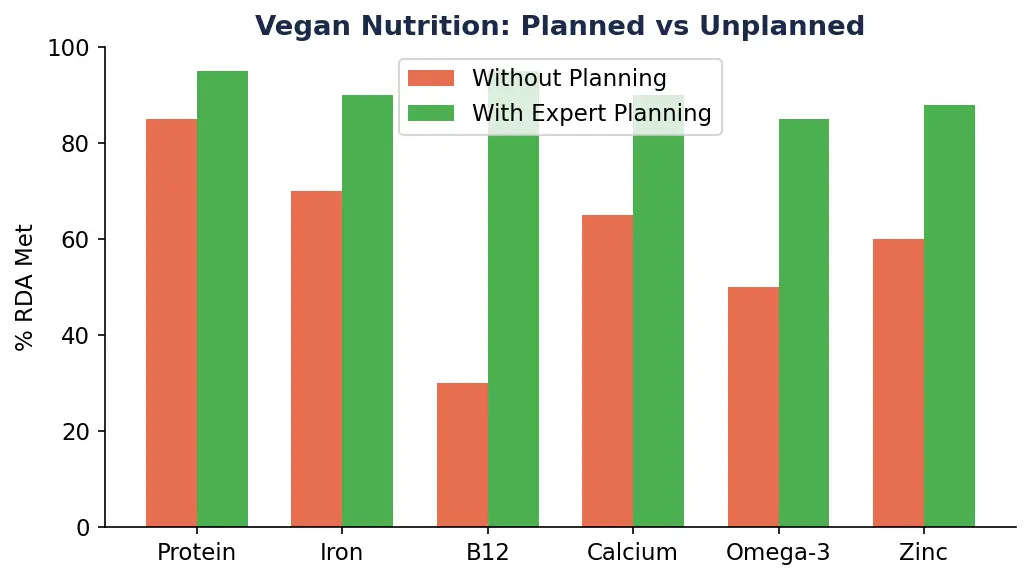
Going vegan is a powerful choice for health, animals and the planet. But without planning, deficiencies in B12, iron, calcium and complete protein creep in silently. Our vegan nutrition plan is designed specifically for Indian lifestyles — using dal, tofu, millets, nuts and fortified foods to meet every nutrient target. You eat abundantly, never feel deprived and stay nutritionally complete.

Who This is For

  • People transitioning from vegetarian or non-vegetarian to fully vegan
  • Existing vegans worried about nutritional gaps or low energy
  • Athletes and gym-goers wanting high-protein plant-based plans
  • Parents raising vegan children who need growth-supportive nutrition
  • Anyone with dairy intolerance or egg allergy seeking balanced alternatives
  • Ethical or environmental vegans wanting optimised health outcomes
Vegan Diet Plan
Our Approach

How We Help You

Nutrient Gap Assessment

We test B12, iron, calcium, vitamin D and omega-3 levels to identify existing deficiencies before designing your plan.

Complete Protein Pairing

Strategic combinations — rice + dal, roti + chana, tofu + quinoa — ensure all essential amino acids are covered daily.

B12 & D3 Strategy

Fortified foods, nutritional yeast and targeted supplementation to prevent the two nutrients impossible to get from plants alone.

Iron Absorption Optimisation

Plant iron paired with vitamin C at every meal, and inhibitors (tea, coffee) timed separately to maximise absorption.

Omega-3 Without Fish

Algae-based DHA, ground flaxseed, chia and walnuts to meet brain and heart omega-3 needs without any animal source.

Annual Blood Monitoring

We recommend 6-monthly blood work to catch any emerging gaps early — especially B12, ferritin and vitamin D.

Food Guide

What to Eat and What to Limit

Eat Plenty Of

  • Protein powerhouses: tofu, tempeh, soy chunks, lentils, chickpeas
  • Calcium sources: ragi, fortified plant milk, sesame, broccoli, figs
  • Iron-rich: spinach, moringa, jaggery, pumpkin seeds, amaranth
  • Omega-3: ground flaxseed, chia seeds, walnuts, algae oil capsules
  • B12 sources: fortified nutritional yeast, plant milks, cereals
  • Whole grains: millets, quinoa, brown rice, oats, whole wheat

Limit or Avoid

  • Relying solely on processed vegan junk food (vegan burgers, chips)
  • Skipping B12 supplementation — no plant food provides adequate B12
  • Excess raw cruciferous vegetables that may affect thyroid (if hypothyroid)
  • Assuming all restaurant "vegan" options are nutritionally balanced
  • Ignoring calcium — plant milks must be fortified and shaken well
  • Over-restricting calories thinking vegan automatically means low-cal
95%
Meet all RDA targets with planning
82%
Report higher energy levels
3-5 kg
Healthy weight loss in month 1
4.7/5
Client satisfaction score
FAQs

Questions Our Clients Ask

Absolutely. Indian vegan diets rich in dal, soy, chickpeas, tofu and quinoa easily provide 60 to 80 grams of protein daily. Athletes can reach 100+ grams with strategic planning and plant protein powders.

Yes. B12 is found only in animal products and fortified foods. Every vegan should take a B12 supplement or consume adequate fortified foods daily — this is non-negotiable for long-term health.

Not necessarily. Vegan diets can be high-calorie if heavy on oils, nuts and processed foods. Weight loss requires a calorie deficit regardless of diet type — which our plan manages precisely.

Yes, with careful planning. We ensure adequate protein, iron, calcium, DHA, B12 and folate through food and targeted supplements. Many healthy pregnancies thrive on well-planned vegan nutrition.

Most Indian cuisine is naturally vegan-friendly: dal, sabzi, roti, rice, sambar, idli. We provide a restaurant guide and function-survival strategy so social eating remains easy and enjoyable.

Ready to start a plan that actually fits your life?

Speak to a registered dietitian in your time zone, in your language.

Book Your Free Consultation
WhatsApp Book
Free 20-Min Consultation