FitNourish
Services
Tools
Book Now

Personalised for You

Elevated uric acid causes painful gout attacks, kidney stones and joint damage. While medication helps, diet is the first line of defence. Our plan identifies and removes high-purine triggers, increases alkaline foods that promote uric acid excretion, and ensures adequate hydration to keep crystals from forming. Most clients see uric acid drop by 1 to 2 mg/dL within 6 to 8 weeks.

Who This is For

  • Anyone with serum uric acid above 7 mg/dL (men) or 6 mg/dL (women)
  • People who have experienced gout attacks in toes, ankles or knees
  • Those with a family history of gout or kidney stones
  • Overweight individuals — excess weight raises uric acid production
  • People on diuretics or medications that elevate uric acid
  • Anyone wanting to prevent recurrent gout flares naturally
High Uric Acid & Gout Diet Plan
Our Approach

How We Help You

Purine Audit

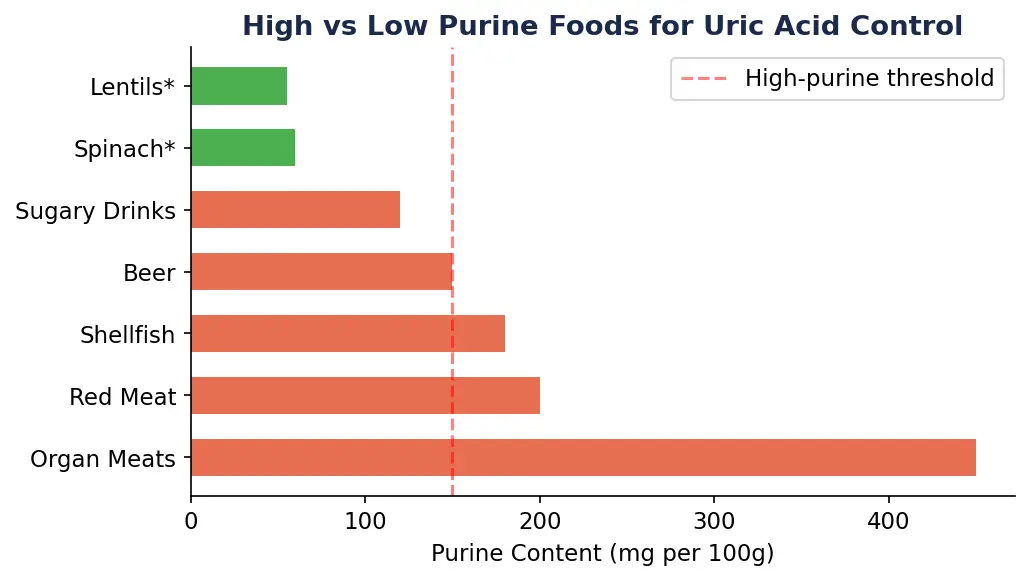
We map your current diet for hidden high-purine foods — organ meats, certain seafood, beer and fructose-heavy drinks.

Hydration Protocol

A minimum of 3 litres daily plus alkaline-promoting foods to increase uric acid excretion through urine.

Alkaline Food Focus

Cherries, citrus, cucumber, celery and low-fat dairy — all shown to lower uric acid or reduce gout risk.

Trigger Elimination

Systematic removal of beer, organ meats, shellfish, sugary drinks and excess red meat.

Weight Management

Gradual weight loss (0.5 to 1 kg per week) reduces uric acid production without triggering acute flares.

Quarterly Lab Monitoring

We track serum uric acid, kidney function and inflammatory markers every 8 to 12 weeks.

Food Guide

What to Eat and What to Limit

Eat Plenty Of

  • Cherries and cherry juice — proven to reduce gout attacks by 35%
  • Low-fat dairy: milk, yoghurt, paneer (promotes uric acid excretion)
  • Alkaline vegetables: cucumber, celery, pumpkin, bottle gourd (lauki)
  • Citrus fruits: lemon water, oranges, mosambi
  • Complex carbs: brown rice, oats, whole wheat (moderate purine)
  • Coffee (2-3 cups daily) — associated with lower uric acid levels

Limit or Avoid

  • Organ meats: liver, kidney, brain — extremely high purine
  • Beer and spirits — beer raises uric acid more than any other alcohol
  • Shellfish: prawns, crab, lobster, mussels
  • Sugary drinks and fruit juices high in fructose
  • Red meat in excess (limit to 1-2 servings per week)
  • Yeast extracts and gravy-based sauces
1-2 mg/dL
Average uric acid drop in 8 weeks
75%
Fewer gout flares in 6 months
88%
Report reduced joint pain
4.7/5
Client satisfaction
FAQs

Questions Our Clients Ask

Yes. Despite being moderate in purines, studies show plant-based purines do not raise gout risk the way animal purines do. Lentils, rajma and chana are safe in normal portions.

Diet alone typically reduces serum uric acid by 1 to 2 mg/dL within 6 to 8 weeks. Combined with hydration and weight loss, some clients achieve normal levels without medication.

This is a myth for most people. Large studies show no significant link between tomato consumption and gout attacks. However, if you notice a personal trigger, we can eliminate and reintroduce to confirm.

No. Chicken and most fish are moderate in purines and safe in controlled portions (100-120g per serving, 3-4 times per week). Only organ meats and certain shellfish need strict avoidance.

Yes. Chronic hyperuricemia can form urate crystals in the kidneys, leading to kidney stones and gradual function decline. Dietary management protects kidney health long-term.

Ready to start a plan that actually fits your life?

Speak to a registered dietitian in your time zone, in your language.

Book Your Free Consultation
WhatsApp Book
Free 20-Min Consultation