FitNourish
Services
Tools
Book Now

Personalised for You

Hypertension affects 1 in 3 Indian adults and is the leading cause of heart attacks and strokes. The DASH diet (Dietary Approaches to Stop Hypertension) is clinically proven to lower systolic BP by 8 to 14 mmHg — equivalent to one medication. Our plan adapts DASH principles to Indian cuisine: reducing sodium, boosting potassium and magnesium, and adding nitrate-rich vegetables that relax blood vessels naturally.

Who This is For

  • Anyone with blood pressure consistently above 130/85 mmHg
  • People diagnosed with Stage 1 hypertension wanting to avoid medication
  • Those already on BP medication wanting to reduce dosage through diet
  • Individuals with a family history of hypertension or stroke
  • People with high sodium intake from pickles, papad and processed food
  • Anyone wanting to protect heart and kidney health long-term
Blood Pressure Control Diet Plan
Our Approach

How We Help You

Sodium Audit

We map your current sodium intake — most Indians consume 9 to 12 grams daily versus the recommended 5 grams. Hidden sources are identified and replaced.

Potassium Restoration

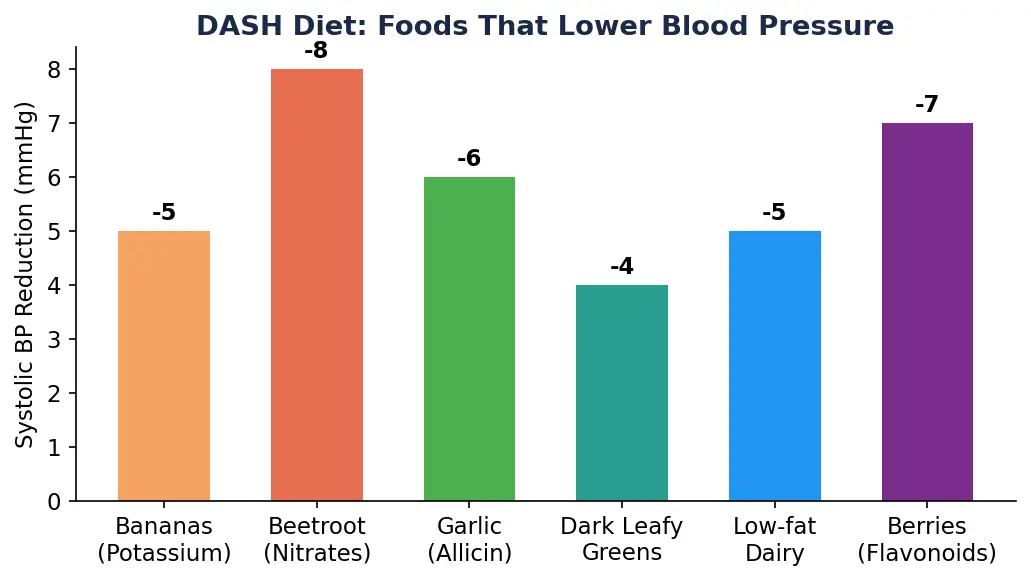
Bananas, coconut water, sweet potato, spinach and dal to restore the sodium-potassium balance that controls blood vessel tension.

Nitrate-Rich Vegetables

Beetroot, leafy greens, celery and garlic produce nitric oxide that relaxes arteries and lowers pressure within hours.

DASH Macro Balance

55% carbs from whole grains, 18% protein from lean sources, 27% healthy fats — the exact ratio proven to lower BP.

Processed Food Replacement

Pickles, papad, canned foods, instant noodles and cheese replaced with fresh, flavourful low-sodium alternatives.

Home BP Monitoring

We teach proper home measurement technique and track morning and evening readings to assess dietary impact objectively.

Food Guide

What to Eat and What to Limit

Eat Plenty Of

  • Potassium-rich: banana, coconut water, sweet potato, spinach, dal
  • Nitrate sources: beetroot, celery, rocket leaves (arugula), radish
  • Magnesium foods: pumpkin seeds, dark chocolate, almonds, avocado
  • Low-fat dairy: curd, buttermilk, paneer — calcium supports BP control
  • Whole grains: oats, brown rice, ragi, jowar — high fibre, low sodium
  • Garlic and hibiscus tea — both shown to reduce systolic BP by 4 to 7 mmHg

Limit or Avoid

  • Table salt beyond 1 teaspoon (5g) per day for the entire household
  • Pickles, papad, chutneys and preserved foods high in sodium
  • Processed meats, canned soups and instant noodles
  • Excess caffeine — more than 3 cups raises BP acutely
  • Alcohol — raises BP and interferes with medication effectiveness
  • High-sodium condiments: soy sauce, ketchup, ready-made masalas
8-14 mmHg
Systolic BP reduction in 8 weeks
72%
Reduce medication dosage
90%
Achieve target BP with diet + meds
4.9/5
Client satisfaction score
FAQs

Questions Our Clients Ask

For Stage 1 hypertension (130-139/80-89 mmHg), diet and lifestyle changes alone often normalise BP within 8 to 12 weeks. Stage 2 typically needs medication, but diet reduces the number and dose of drugs required.

The WHO recommends less than 5 grams (1 teaspoon) of salt daily. Most Indians consume double this. We teach practical ways to reduce sodium while keeping food flavourful using herbs, spices, lemon and vinegar.

Coconut oil is neutral for BP but high in saturated fat. We recommend olive oil, mustard oil or groundnut oil as primary cooking fats for better cardiovascular outcomes.

Initially yes, for about 2 weeks. Then your taste buds recalibrate and you start appreciating natural flavours. We use garlic, ginger, cumin, coriander, lemon and herbs to keep meals delicious.

We recommend twice daily — morning (before medication) and evening — for the first 4 weeks. After stabilisation, 3 to 4 times per week is sufficient for ongoing monitoring.

Ready to start a plan that actually fits your life?

Speak to a registered dietitian in your time zone, in your language.

Book Your Free Consultation
WhatsApp Book
Free 20-Min Consultation