FitNourish
Services
Tools
Book Now

Personalised for You

India has one of the highest anemia rates in the world — over 50% of women and 25% of men are affected. Low haemoglobin leaves you exhausted, breathless and pale. The solution is not just iron tablets. Our anemia diet pairs iron-rich foods with vitamin C for maximum absorption, while removing inhibitors like excess tea and calcium at iron-meal times. Results show within 4 to 6 weeks on blood reports.

Who This is For

  • Women with heavy periods or post-delivery blood loss
  • Vegetarians and vegans at higher risk of iron deficiency
  • Children and teens with low energy and poor growth
  • Anyone with haemoglobin below 11 g/dL on recent blood work
  • People who feel dizzy, breathless or constantly fatigued
  • Patients recovering from surgery or chronic illness
Anemia Diet Plan
Our Approach

How We Help You

Lab-Based Assessment

We review your CBC, serum ferritin, B12 and folate reports to identify the exact type of anemia before planning.

Iron Pairing Strategy

Every iron-rich meal is paired with vitamin C (amla, lemon, orange) to boost absorption by up to 300%.

Inhibitor Separation

Tea, coffee and calcium-rich foods are timed away from iron meals to prevent absorption blocks.

Heme + Non-Heme Mix

For non-vegetarians we include heme iron (liver, red meat) alongside plant-based non-heme sources for faster recovery.

B12 & Folate Coverage

We ensure adequate B12 (eggs, dairy, fortified foods) and folate (greens, legumes) — both essential for red blood cell production.

Monthly Blood Tracking

We recommend monthly CBC checks and adjust the plan as your haemoglobin rises toward the target range.

Food Guide

What to Eat and What to Limit

Eat Plenty Of

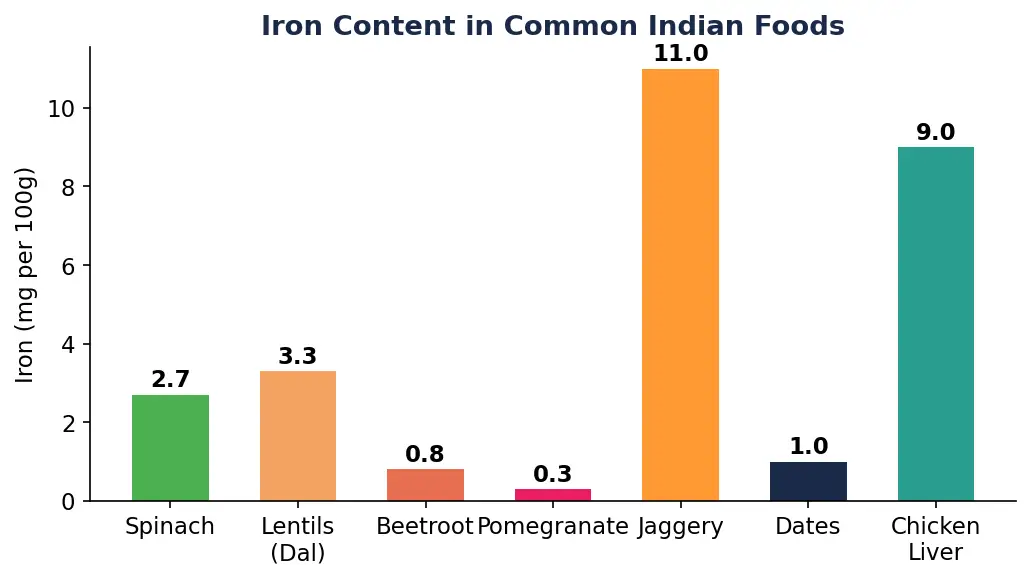
  • Iron powerhouses: jaggery, sesame seeds, garden cress (halim), moringa
  • Leafy greens: spinach, amaranth (chaulai), fenugreek (methi)
  • Pulses and legumes: black chana, rajma, masoor dal, soybean
  • Vitamin C boosters: amla, guava, orange, lemon, bell peppers
  • Animal sources: chicken liver, eggs, red meat, fish
  • Dried fruits: dates, raisins, figs, apricots

Limit or Avoid

  • Tea or coffee within 1 hour of iron-rich meals
  • Excess dairy at the same time as iron foods
  • Processed and junk food that displaces nutrient-dense options
  • Antacids and calcium supplements alongside iron meals
  • Excess whole-grain phytates without soaking or fermenting
  • Carbonated drinks that reduce mineral absorption
2-3 g/dL
Avg Hb rise in 8 weeks
89%
Report better energy by week 4
94%
Achieve target Hb in 12 weeks
4.9/5
Client satisfaction
FAQs

Questions Our Clients Ask

Mild anemia (Hb 10-11 g/dL) often responds to diet alone within 8 to 12 weeks. Moderate to severe cases may need supplements alongside the diet plan — your dietitian will advise based on lab reports.

Yes. Plant-based iron (non-heme) absorbs well when paired with vitamin C. Jaggery, sesame, garden cress and moringa are excellent vegetarian iron sources used in our plans.

Most clients see a 1 to 1.5 g/dL haemoglobin rise within the first 4 to 6 weeks. Full recovery to normal range typically takes 10 to 14 weeks depending on severity.

Eating well does not always mean eating right for anemia. Iron absorption depends on meal combinations, timing and avoiding inhibitors — all of which our plan optimises.

Yes. Pregnancy increases iron needs significantly. We design trimester-specific plans that meet both maternal and foetal requirements safely.

Ready to start a plan that actually fits your life?

Speak to a registered dietitian in your time zone, in your language.

Book Your Free Consultation
WhatsApp Book
Free 20-Min Consultation